HDMI Adapter
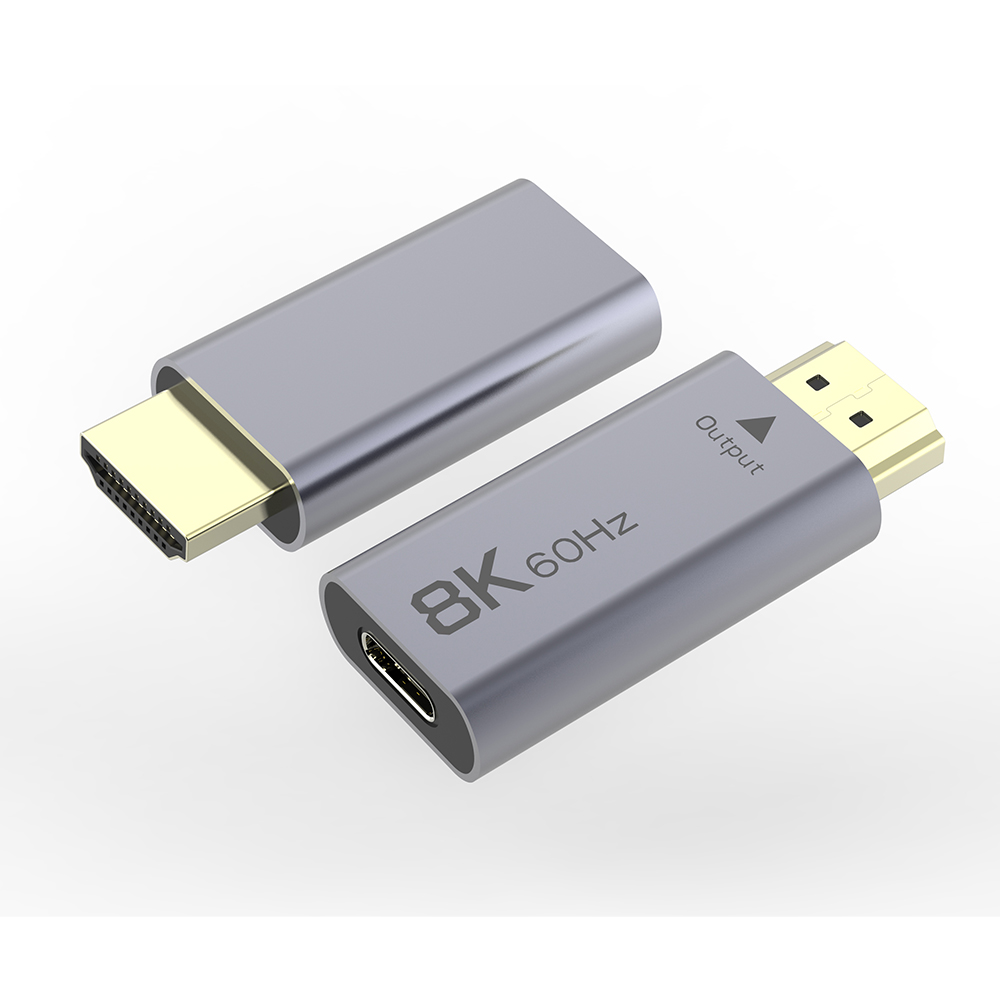
Len-Link is an HDMI adapter factory manufacturing compact video connectivity solutions for computers, monitors, projectors, displays, AV equipment and legacy device integration. Our current HDMI adapter range includes DVI-to-HDMI configurations with 18+1, 24+1 and 24+5 connector options, male/female combinations, rotatable structures and VGA-to-HDMI connectivity products.
For distributors, electronics brands, AV equipment companies and OEM projects, we support standard models as well as customized connector configuration, housing, appearance, logo and packaging requirements.
If your project requires HDMI connection cables rather than compact interface adapters, you can also view our HDMI Cable range.
An HDMI adapter should not be selected only by the connector visible on each device. The source interface, display interface, signal format, connector gender and required resolution all need to be considered.
DVI-to-HDMI adapters provide a practical way to connect compatible digital DVI equipment with HDMI displays or HDMI cabling.
Len-Link's current range includes configurations such as:
Different housing and appearance options
These adapters can be used where existing computers, graphics equipment or display systems need to work with HDMI infrastructure without replacing the original DVI connection.
For projects centered mainly on DVI connector configurations, see our DVI Adapter range.
HDMI and compatible digital DVI signals can be connected in either direction in suitable passive configurations, but the physical connector and supported functions are not identical.
DVI is primarily a video interface, so an HDMI source does not mean audio will automatically be available through the DVI side of the connection.
VGA and HDMI use different signal formats. VGA is analog, while HDMI is digital. For this reason, VGA/HDMI conversion should not be treated in the same way as a simple DVI-to-HDMI connector adapter.
Where analog-to-digital or digital-to-analog signal conversion is required, the project may need an active conversion design.
DVI connector configuration is one of the most important selection factors for this product category.
| DVI Configuration | Typical Consideration |
|---|---|
| 18+1 | Digital DVI configuration used in suitable single-link applications |
| 24+1 | Digital DVI configuration for compatible display connections |
| 24+5 | DVI-I style connector configuration requiring careful compatibility confirmation |
| Male to Female | Common when adapting an existing device port to another cable/interface |
| Female to Female | Useful for coupling or interface extension requirements |
| Male to Male | Suitable for specific direct connection structures |
| Rotatable Design | Useful when equipment position or cable routing makes a fixed connector inconvenient |
Do not select a product only because two DVI connectors appear physically similar. Pin configuration and signal requirements should be checked against the source and display equipment.
This distinction is especially important when sourcing video adapters.
A passive adapter is appropriate when the source and destination interfaces use compatible digital signal formats and only physical connector adaptation is required.
DVI-to-HDMI is a common example where passive adaptation may be possible.
An active converter uses electronic circuitry to change one signal format into another.
This becomes relevant when converting between analog and digital interfaces, such as certain VGA and HDMI applications.
Before sending an inquiry to an HDMI adapter factory, specify the exact conversion direction instead of only requesting a "VGA HDMI adapter." This prevents confusion over whether your application requires passive connection or active signal conversion.
An adapter is appropriate when the main requirement is to change the connector interface while continuing to use an existing cable.
A cable is more appropriate when the project requires a complete point-to-point connection over a defined length.
For a direct HDMI-to-HDMI installation, see HDMI Cable [Internal Link: /hdmi-cable/].
For USB-C computers that need HDMI display output, see USB C to HDMI [Internal Link: /usb-c-to-hdmi/] rather than selecting a DVI/HDMI adapter.
For applications converting an HDMI source toward USB-C display equipment, see HDMI to USB C [Internal Link: /hdmi-to-usb-c/] and confirm signal direction and device compatibility before ordering.
For bulk sourcing, prepare the following information before choosing a model:
| Requirement | What You Should Confirm |
|---|---|
| Source Interface | HDMI, DVI, VGA or another video interface |
| Output Interface | HDMI, DVI, VGA or target display connection |
| DVI Pin Configuration | 18+1, 24+1, 24+5 or required specification |
| Connector Gender | Male or female at both ends |
| Signal Type | Digital, analog or signal conversion required |
| Resolution | Target display resolution |
| Refresh Rate | Required operating refresh rate |
| Audio | Whether audio transmission is required |
| Structure | Fixed, compact or rotatable |
| Housing | Standard or customized design |
| Quantity | Sample, initial order or volume production |
| Branding | Logo, label and packaging requirements |
Providing this information at the beginning of the project makes model selection and sample verification more efficient.

Connector direction can become important when an adapter is installed behind a monitor, close to a wall or inside equipment with limited clearance.
Len-Link currently offers a 360-degree rotatable DVI-to-HDMI adapter configuration. This type of structure can provide more installation flexibility where a conventional straight adapter creates excessive cable bending or occupies too much space.
For OEM projects requiring another connector orientation, drawings or physical reference samples can be provided for engineering evaluation.
As an HDMI adapter factory, Len-Link supports OEM/ODM projects where standard models do not fully match the required connector, structure or commercial packaging.
Custom requirements can include different combinations of:
HDMI male or female
DVI male or female
DVI pin configurations
VGA interfaces
Connector orientation
Direct or rotatable structures
The required source-to-display direction should be clearly specified when active signal conversion is involved.
Customization can cover:
Housing dimensions
Housing material
Product color
Connector orientation
Compact structure
Rotatable structure
Surface appearance
Mechanical drawings or samples are particularly useful when the adapter needs to fit inside existing equipment or a restricted installation space.
Depending on the project, requirements can also include:
Connector finish
Housing finish
Different colors
Product identification
Logo marking
Model labeling
These options are useful for accessory brands and distributors building their own video connectivity product lines.
DVI-to-HDMI adapters allow computers and graphics equipment with DVI interfaces to connect with newer HDMI display infrastructure.
Adapters can support integration between computers, projectors and installed AV systems using different generations of video interfaces.
HDMI and DVI connectivity remains common in meeting rooms, educational installations, control rooms and commercial display environments.
Compact or rotatable adapter structures can be useful where displays are installed close to walls or inside restricted mounting spaces.
DVI and VGA remain present on older computers, industrial equipment and display systems. Suitable adapters allow these devices to remain connected while surrounding AV infrastructure transitions to HDMI.
Custom connector orientation, housing or interface configurations can be developed for display equipment and other electronics where a standard consumer adapter does not match the mechanical layout.
The current product range includes several DVI-to-HDMI configurations using 18+1, 24+1 and 24+5 DVI connectors, different male/female combinations, rotatable designs and VGA/HDMI connectivity products.
Not necessarily. Compatible digital DVI and HDMI interfaces can often use a passive adapter, while conversion between different signal formats may require active electronics. The source interface, destination interface and signal type should be confirmed first.
Yes. OEM/ODM projects can be evaluated for connector combination, male/female configuration, housing, color, mechanical structure, logo, labeling and packaging.
Len-Link already manufactures a rotatable DVI-to-HDMI adapter. Other mechanical structures can be evaluated according to drawings, samples and order requirements.
Send Len-Link your source interface, destination interface, DVI pin configuration, male/female requirement, target resolution, application, order quantity and OEM requirements.
Whether your project requires a standard DVI-to-HDMI adapter, a rotatable connector, private-label packaging or a customized video interface solution, our HDMI adapter factory can evaluate the appropriate configuration for sampling and volume production.
USB Charging Cable vs Data Cable Comparison
Sep. 30, 2026
How to Choose the Right USB Cable for Different Applications
Sep. 30, 2026
USB Cable Types Explained for Industrial and Consumer Applications
Sep. 30, 2026
Give Us A Call
+86 136 6270 0743
Send Us A Message
Official Location
Shipai Town, Dongguan City, Guangdong, China

As source factory, we have the most strict requirements on quality and service. We can video the production process for clients and provide free samples for quality testing.
Navigation
Products
Media Center